
Workmanship Cover vs Parts Cover
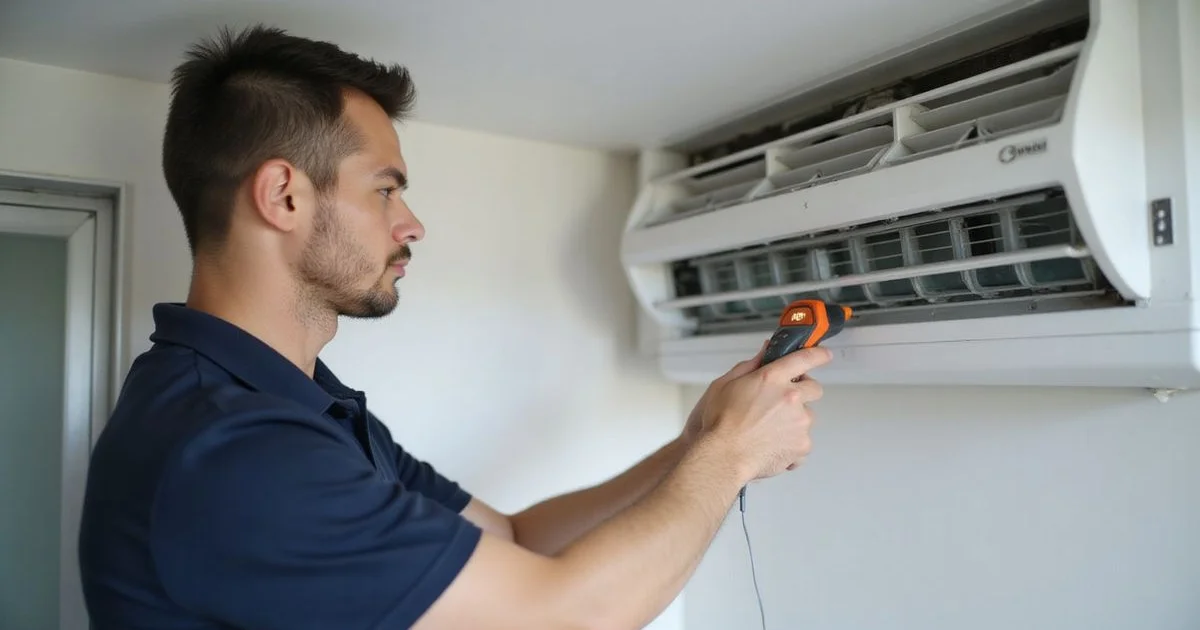
An aircon workmanship warranty covers the job we did, not the parts inside your unit. “Warranty” gets used loosely in the aircon trade, so it helps to split it into two things.
Workmanship cover is about the work itself. If the job doesn’t hold and the same fault comes back, we put it right. Parts cover is about a component that fails. That depends on the part and its manufacturer, not on the labour.
| Workmanship cover | Parts cover | |
|---|---|---|
| What it covers | The service or repair job | A component that fails |
| Who backs it | The company that did the work | The brand that made the part |
| Typical length | 60 to 90 days is common in Singapore | Often 1 to 2 years on the unit, 5 years on the compressor |
On the parts side, the home guide iDLAH notes that most major brands, including Daikin, Mitsubishi Electric, LG, Panasonic and Midea, offer 1 to 2 years on the complete unit and 5 years on the compressor. Check your own paperwork, since terms differ by brand and model.
Our 90-day warranty is a workmanship warranty. It’s why you can book aircon servicing with a 90-day warranty and know the result is backed, not just the invoice.
How the 90-Day Return-Visit Promise Works
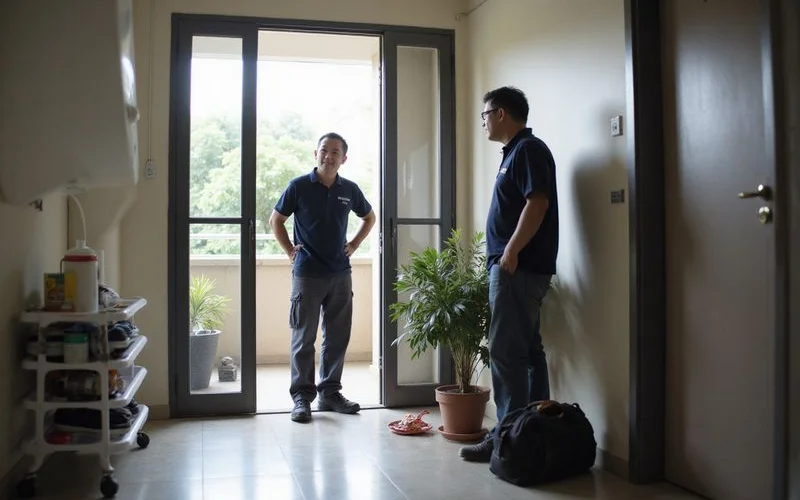
If the same fault we worked on returns within 90 days of the job, we come back and fix it at no extra charge. For example, if we clear a leaking drain line and it chokes again in that window, we return and sort it. The clock starts on the day the job is completed and paid.
This matters because aircon problems aren’t always obvious at the moment of repair. A return-visit promise means you aren’t gambling on whether the fix lasts.
A quick look at Singapore aircon servicing websites in 2026 shows both 60-day and 90-day windows are common. The longer the window, the more time a returning fault has to show itself, so the number is worth comparing.
If you need to call us back, have these ready:
- Your dated receipt or e-invoice. It proves the completion date.
- Which unit it is. Say “master bedroom” or “living room”, especially if you have 3 or 4 wall units.
- What you’re seeing. A short note or photo of the leak or warm air helps us match it to the original job.
What Is Usually Excluded
A workmanship warranty isn’t a catch-all. In general, it does not cover:
- A new, unrelated fault. If a different part fails in a different unit, that is a new job.
- Misuse or damage. Physical damage, power surges or tampering after the visit.
- Wear on an old unit. A warranty on a service doesn’t make an ageing unit new.
The last point matters most for older flats. According to aircons.sg, a well-serviced aircon in Singapore can last around 10 to 15 years, so a unit near the end of that range may develop new faults even after a good service.
This is normal across the trade. The key is that the specific work we did is backed for the period.
Questions to Ask Any Provider
Before you book anyone, ask:
- Is there a workmanship warranty, and how long?
- Does it mean a free return visit if the same fault comes back?
- When does the warranty start, and what is excluded?
- Is it written on the receipt?
- Does it apply to every unit I’m having done, or only one?
The last question is easy to miss if you have 2 to 4 wall-mounted units. A 2026 guide from NewCool also advises asking for warranty lengths and coverage details alongside a written quote, so get both in writing.
If a provider can’t answer these clearly, that tells you something. A real warranty is specific, dated and honoured, which is exactly how ours works.